Every year in April, hundreds of thousands of people visit Skagit Valley, Washington, for the Tulip Festival . The annual festivities have been canceled due to the coronavirus pandemic, sending tulip growers into a frenzy.
The Tulip Festival — which officially started in 1984, but has had variations dating back to the early 1900s — is big business. The 30-day event brings in an estimated $65 million in revenue for the region. Family-owned farm Tulip Town was projected to make $1 million in April from the celebration.
Get breaking news alerts and updates about the coronavirus outbreak across New England in your inbox. Sign up now .
Andrew Miller, CEO of Tulip Town , said the farm had to pivot to new sources of revenue quickly in order to make up for the loss — and to be able to consider putting on the festival in 2021.
Miller acquired the farm from a Dutch couple last year, so the 2020 Tulip Festival was his chance to make a good first impression as the new grower. To adapt, he says the farm has focused on moving flowers from the field to customers in new ways, while also being more active on social media.
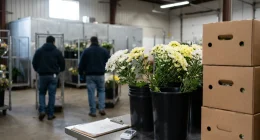
Just in time for prime buying season with Mother’s Day on the horizon, Tulip Town has decided to package and ship fresh bouquets. Miller says the team has been “overwhelmed by the response.” The annual Tulip Festival in Skagit Valley, Washington, has been canceled due to the coronavirus. (Photo courtesy of Tulip Town) “We really love exporting the beauty and the hope and the joy of spring here in the Skagit Valley around the country,” he says.
Raising tulips is a year-long undertaking. The flowers typically bloom in April, which is why May is ripe timing for a festival revolving around their vibrant beauty.
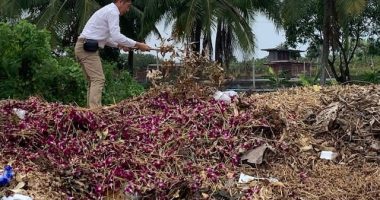
Miller’s farm has begun topping their tulips — a process that involves taking the tops off the plant so the bulb can strengthen for the next harvest.
Although topping tulips may appear to be total destruction of the eye-catching flower, it’s actually a “life-saving surgery,” Miller says, because otherwise, the plant would die.
Tulip Town has used this distressing time to connect with the community, he says. One initiative underway is #ColorForCourage , where people around the world can donate a bouquet that Miller’s farm sends to a nursing home or hospital “here in our community where people just love tulips,” he says.
As for the tulip industry in Skagit Valley, he says they will persevere.
“There will be a next year,” he says. “How that comes about? We’ll still have to see.”
Marcelle Hutchins produced and edited this interview for broadcast with Peter O’Dowd . Serena McMahon adapted it for the web.
Source: Washington’s Tulip Town Closes To Annual Festival-Goers

The SuperFloral Team brings you news, trends and practical ideas for supermarket and mass-market floral professionals. Our editors gather and curate the stories that matter most to floral teams in grocery and retail, from industry news and events to merchandising inspiration and business advice. Have a story idea or news tip? Write to us at editorial@superfloral.com.