
Horticultural businesses have until Sept. 30 to contribute to AmericanHort’s 2026 Salary and Benefits Benchmark Survey, a compensation study that could give participating growers and retailers another reference point for workforce planning.
The deadline creates an immediate task for managers responsible for payroll and staffing: assemble the company’s information before the survey closes. It also calls for a distinction between collecting data now and drawing conclusions later. The current invitation does not establish that wages have risen, benefits have changed or any particular employer is paying above or below its peers.
A compensation survey with a September deadline
AmericanHort’s benchmarking overview lists two separate 2026 studies. Its financial survey ran from June 1 through July 31. The salary and benefits survey opened Aug. 3 and closes Sept. 30. Businesses reviewing their earlier participation should check which study they completed; submitting financial information in the summer is a separate undertaking from the current compensation questionnaire.
According to the association’s salary survey page, participation is open to members and nonmembers. Respondents can provide information on as many as 34 job titles, covering full-time, part-time and seasonal workers. AmericanHort expects the full benchmark report in early December.
Completed respondents receive the full report, according to the benchmarking overview. A personalized company compensation comparison is a separate benefit with membership and eligibility conditions. Managers should check those conditions before assuming that participation includes a customized analysis.
Gather the records before opening the questionnaire
The association’s 2026 preparation guide estimates about 25 minutes for first-time respondents, depending on the number of job titles included. Companies create an account in the Industry Insights portal or return to an existing one. They can save their work and return before the deadline.
The requested information extends beyond individual pay rates. The guide asks for production or retail area, locations, customer types, peak-season employment expressed in full-time equivalents, revenue and payroll costs. It also requests information about benefits, retirement-plan matching, employer contributions to medical coverage, paid leave and anticipated pay changes.
Returning participants should review retained information and update wages, benefits, positions and job titles. The guide says payroll information can be updated through a spreadsheet available in the portal.
For a greenhouse or plant supplier, preparing that submission is an opportunity to bring staffing and compensation records together. One practical approach is to assign a person to coordinate payroll, operations and human resources inputs, then check that each department is using the requested reporting period. That is an editorial recommendation, not an additional survey requirement.
Read the eventual results in context
Industry Insights collects and analyzes responses on behalf of AmericanHort and GrowerTalks and Green Profit magazines. AmericanHort says individual responses are confidential and benchmark data is reported in aggregate. Those organizations’ involvement should be clear when evaluating the resulting study.
The publicly available sample report is from 2023, not the current survey. It covered 239 organizations representing nearly 12,000 employees. Its comparisons included greenhouse growers, nursery growers and retail garden centers, with breakdowns by business size and region, including Canada.
That older report offers useful guidance on interpretation. It cautions that compensation statistics are reference points rather than absolute standards and that company size, location and employee experience can affect comparisons. It also explains the difference between averages and medians and withholds statistics where responses are insufficient.
Those features illustrate questions to ask when the new report arrives. They do not establish the 2026 sample size, geographic mix or findings. Buyers and suppliers should review the new participant profile before applying a broad horticultural benchmark to a specific floral operation.
What floral businesses can do now
The immediate decision is whether to participate before Sept. 30. The later decision is how much weight to give the results alongside a company’s own staffing needs and experience.
For mass-market floral teams, the strongest use of a benchmark is as a starting point for questions: Are comparable jobs being compared? Does the relevant group resemble the operation? Do pay and benefits tell the same story? A single industry figure cannot answer all three. Careful preparation now can make the eventual comparison more useful without treating it as a prescribed wage or a forecast.
Related reading: SuperFloral’s earlier feature on managing a multigenerational workforce.
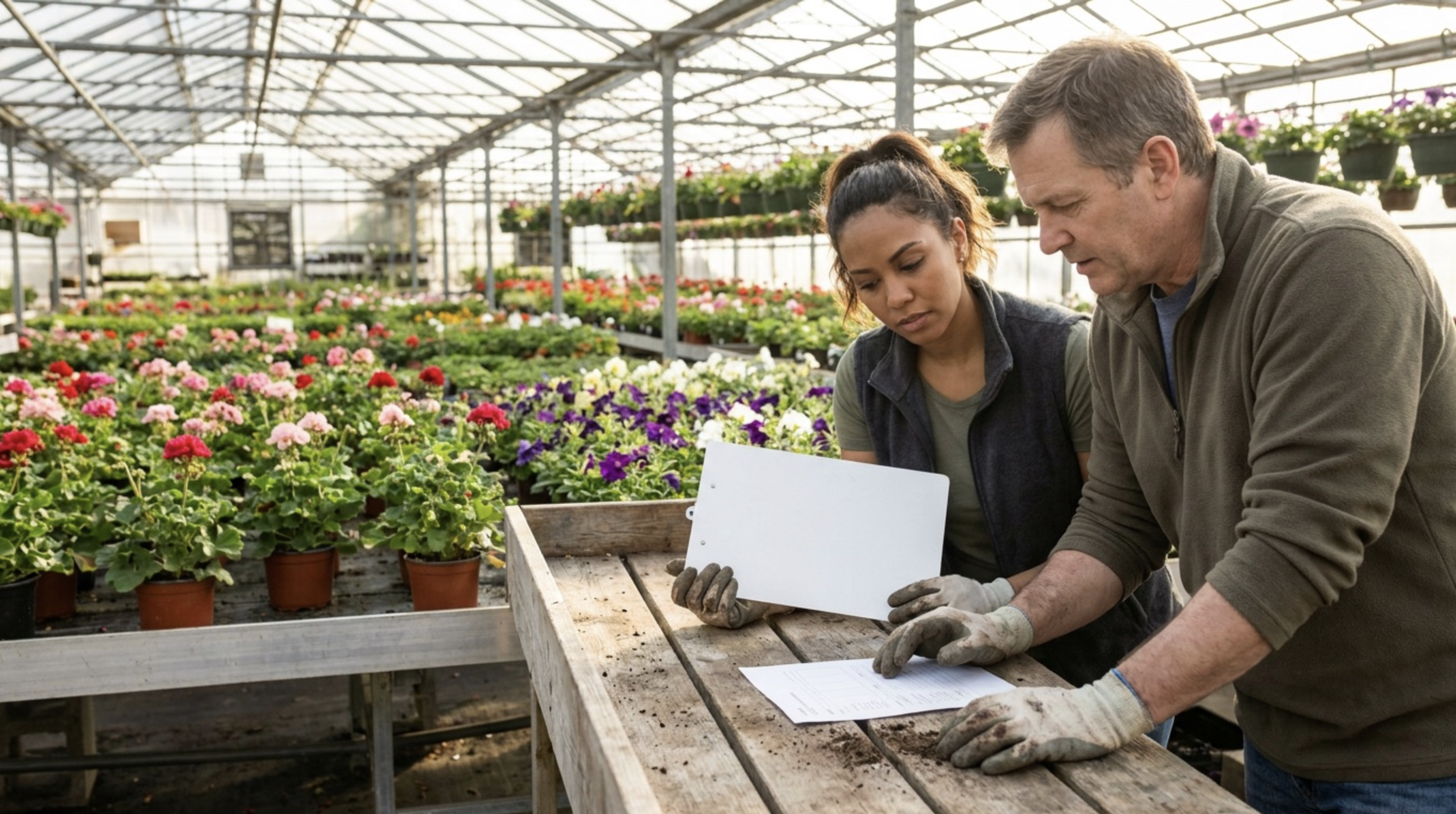
Participation details come from AmericanHort. Preparation and interpretation recommendations are editorial analysis. Illustration: AI-generated illustration created for SuperFloral; it does not depict an actual facility or survey results.

The SuperFloral Team brings you news, trends and practical ideas for supermarket and mass-market floral professionals. Our editors gather and curate the stories that matter most to floral teams in grocery and retail, from industry news and events to merchandising inspiration and business advice. Have a story idea or news tip? Write to us at editorial@superfloral.com.