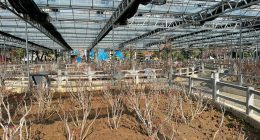
For several years Rosy and the Propagation team at Hardy’s Cottage Garden Plants have been trialling the use of cork in the propagation of our herbaceous perennials.
Following a number of tests which have used cork instead of vermiculite and perlite, Rosy and the propagation team now use the below mixtures.
Using 1 to 2 MM Granules: Replacing Perlite
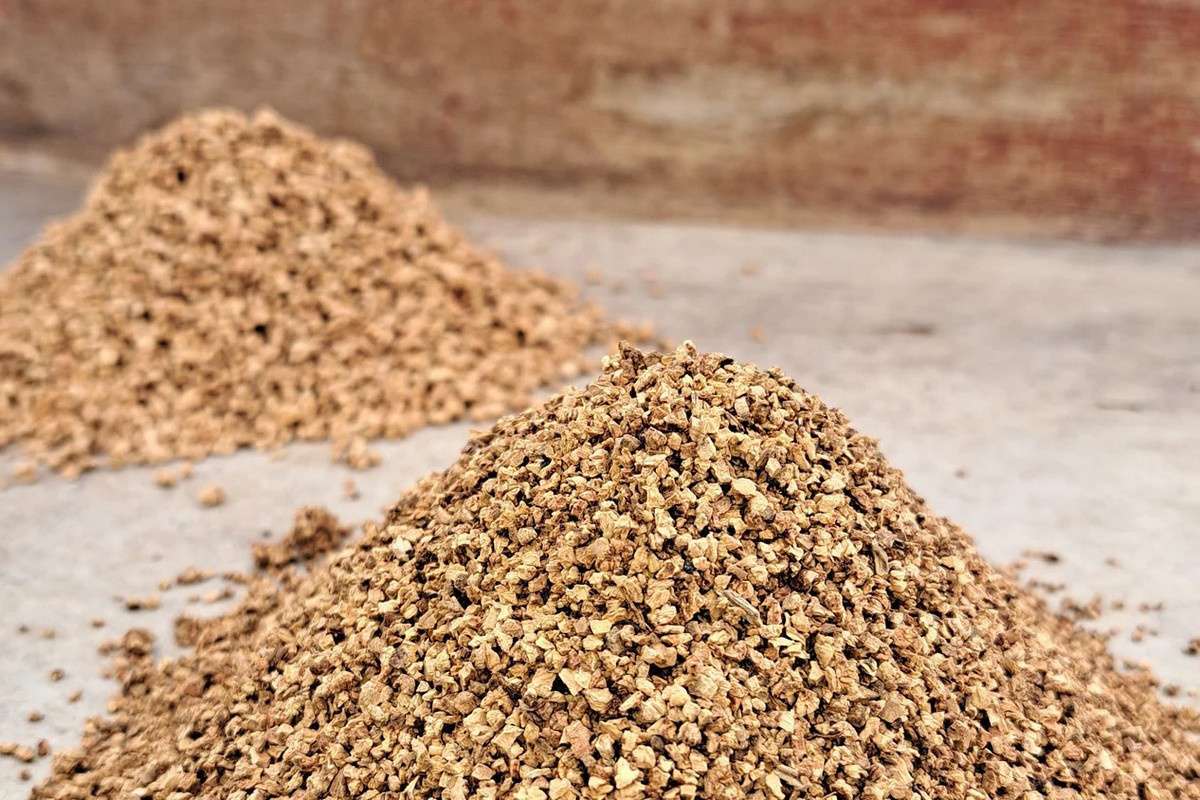
Mix the 1-2mm cork into peat-free growing media (1-part cork to 3-4 parts compost). Mixing these into compost gives a light weight, free-draining growing media. If you want to make the mix heavier you can mix in a little bit of horticultural grit.
You can also sprinkle 1 – 2 mm size granules on the surface of the media of newly struck cuttings. It keeps the cutting trays or modules clean. This size of cork granule doesn’t work so well for topping seeds as it can create a little bit of a cap and the water doesn’t penetrate properly.
Using 4 to 5MM Cork Granules: Replacing Vermiculite
Sprinkle a very thin layer of 4-5 mm cork to cover seeds which have yet to germinate. This has good air and water porosity which makes it easy for the newly germinated seedlings to push through. But, you have to be careful not to use too much cork.
Alternatively, cork can also be used to top the growing media after seeds have germinated. Use a small amount to enable water to penetrate. This will keep the surface clean, you will get less insects and less damping off, resulting in fewer losses.
Rosy discovered using cork in this way results in fantastically fast draining pots; No slimy green growth on tops of seed trays due to the anti-bacterial and fungicidal qualities of cork; A reduction in the prevalence of 2 types jumping insects, Sciarid and Shore Fly as the surface of the pot is cleaner, leaving little or no debris for these insects to feed on; 4-5 mm cork granules are the same size as vermiculite; and using less cork than vermiculite.
Rosy has also found that cork does not assist with water absorption as perlite does; watering heavily can cause the cork topping to wash away; using too much cork on top of pots can prevent germinating seeds pushing through; and cork is more expensive than perlite and vermiculite, but you get more for your money, and you use less, making it as, or more, cost effective.
Other Plant Trials
Rosy uses cork to pot all her Aeoniums using her ‘crumble mix’ which consists of 3 parts compost to 1-2 parts cork (1-2mm). This is a lovely friable, free-draining mix that suits her succulents perfectly. She uses a chunky 20-50 mm grade as a decorative pot topper and is also testing it as an alternative to bark for planting orchids.

The SuperFloral Team brings you news, trends and practical ideas for supermarket and mass-market floral professionals. Our editors gather and curate the stories that matter most to floral teams in grocery and retail, from industry news and events to merchandising inspiration and business advice. Have a story idea or news tip? Write to us at editorial@superfloral.com.