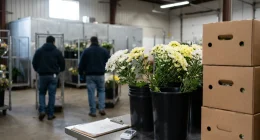

With the goal of offering products distinguished by their aesthetic vigor, adaptability, and longevity, INTA San Pedro and the Chamber of Nursery Growers are launching 2,000 virus-free roses onto the market. The initiative ensures the distribution of clean genetic material through protocols that guarantee the phytosanitary standard of each plant.
In the San Pedro district, fruit, vegetable, and nursery production accounts for 86.7% of rural employment, making quality improvements essential to sustaining the local economy. For this reason, INTA has spent years developing protocols to systematize production, promote crop propagation, and maintain plant health standards.
Laura Hansen, director of INTA’s San Pedro Agricultural Experimental Station, outlined the distinctive characteristics of the roses going to market. “These plants have a guaranteed longevity because, being free of the main viruses that affect roses, their useful life is significantly longer,” she said, adding: “They also show a greater capacity to recover after transplanting, as well as healthy growth and superior flowering.”
The roses going on sale are varietally identified. Listed in the national cultivar catalog, they are plants whose characteristics are well documented. “While it is common to identify them by color, a cultivar has many additional characteristics that set it apart,” Laura said, adding that “this work means all that information is included in the catalog developed by INTA.”
To ensure buyers have reliable information, each plant carries special labeling: a yellow tag that includes a photo of the rose and a QR code. The code links to the rose catalog on the Chamber of Nursery Growers’ website, where the full characteristics of the cultivar can be found, beyond just its color.

Varieties Selected for Market Demand
Although the mother plant block at the experimental station holds around 90 varieties that have tested negative for the four viruses that commonly affect roses, only those with the strongest public appeal were selected for this joint launch with the Chamber.
“The decision was made to grow only certain varieties to simplify logistics, given that these are plants with high market demand,” said Laura. The available varieties include: Iceberg, Europeana, Jubilé du Prince de Monaco, Charles Aznavour, Papa Meilland, Rouge Meilland, Mr. Lincoln, and Cristóbal Colón.
Protocol for Rose Production
This quality standard is underpinned by a rigorous four-stage protocol designed by the extension and plant pathology team at INTA San Pedro. The process begins with the initial block, where each variety undergoes detailed morphological observation and laboratory testing during its first spring budbreak. Any plants that test positive for any of the viruses analyzed are removed, ensuring that only healthy genetic material advances to the pre-increase block, which serves as the primary source of budwood for growers.

For nursery growers, the systematization continues in the increase blocks, where the mother plants used to obtain cuttings and budwood are kept. This scheme requires strategic planning: the mother plants must remain identified and in a fixed location for a maximum of five years, guaranteeing full traceability of the material. Finally, production reaches the commercial block, where the aim is to sell plants that have passed specific tests for the most common rose viruses, including Prunus Necrotic Ringspot Virus (PNRSV) and Apple Mosaic Virus (ApMV).
Obtaining the label is not a one-off process, it involves ongoing technical support. Throughout the production cycle, establishments receive advisory visits to oversee everything from the planting of cuttings and grafting success to the final plant health assessment prior to sale. This scientific and operational framework has enabled plants to reach the public since 2020 with the assurance of a higher-value product meeting national plant health standards.

The SuperFloral Team brings you news, trends and practical ideas for supermarket and mass-market floral professionals. Our editors gather and curate the stories that matter most to floral teams in grocery and retail, from industry news and events to merchandising inspiration and business advice. Have a story idea or news tip? Write to us at editorial@superfloral.com.