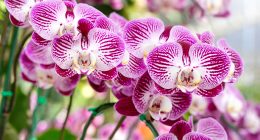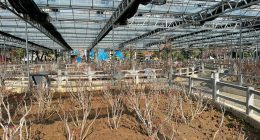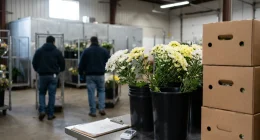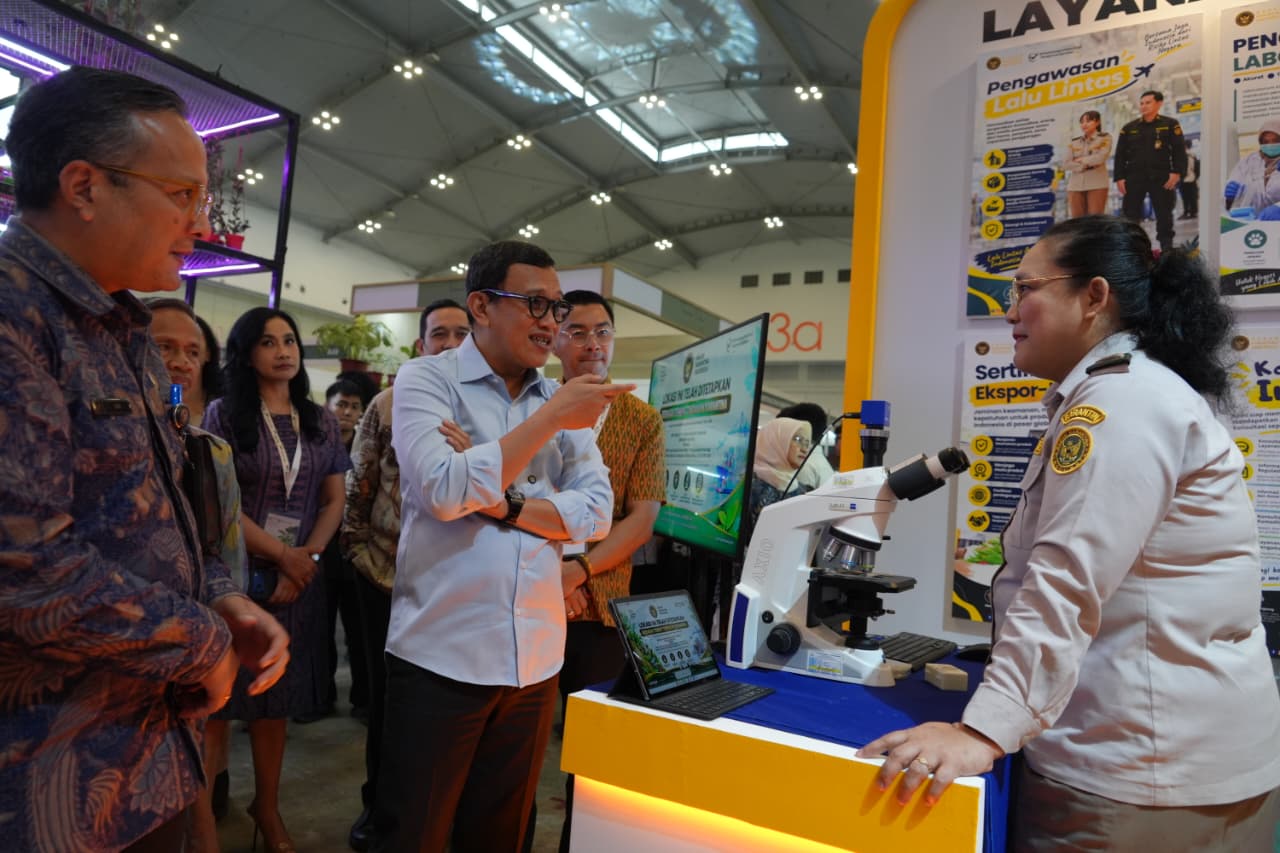

Indonesia exported Rp3.51 trillion in floriculture products to 96 countries between Jan. 1 and Sept. 14, 2026, according to the country’s quarantine authority, highlighting the expanding international role of an emerging ornamental-production market.
Indonesia’s Agricultural Quarantine Agency, known as Barantin, reported export volume of 59.6 million floriculture units during the period. The agency said full-year 2025 exports were valued at Rp4.42 trillion, representing 93.9 million units shipped to 95 countries.
The product mix includes chrysanthemums, chrysanthemum planting material, lily planting material, Saintpaulia planting material, aquarium plants and other ornamental plants. The figures encompass a broader floriculture category than cut flowers alone, but they show the growing reach of Indonesia’s plant and flower sector.
Market growth comes with phytosanitary responsibility
Barantin emphasized that access to international markets depends on meeting quarantine requirements in destination countries. That is particularly important for live plants and propagative material, where pest and disease concerns can result in inspections, treatments, shipment holds or refused entry.
For importers and buyers, a new production region offers potential assortment diversity and alternative sourcing. It also requires careful verification of commodity-specific import rules, certification, treatment requirements and documentation before a program is committed.
Indonesia’s biodiversity creates opportunities for differentiated ornamental products, but biodiversity protection also makes phytosanitary controls central to the country’s export strategy. Commercial development must therefore advance alongside traceability and plant-health compliance.
An emerging supplier beyond established flower regions
North American mass-market floral sourcing is strongly associated with Colombia, Ecuador, Canada, the Netherlands and domestic production. African countries including Kenya and Ethiopia also play major international roles. Indonesia’s figures point to a wider group of countries developing export capacity in ornamentals and propagation.
That does not mean Indonesia can immediately replace established suppliers. Logistics, cold-chain access, consistency, certifications, production scale and transit time all influence whether a product can support a high-volume retail program.
The country’s reach into 96 destinations, however, suggests that producers and regulators are building experience across multiple import regimes. For breeders and young-plant companies, Indonesia may be particularly relevant where specialized propagation, tropical plants or distinctive genetic material are involved.
What buyers should evaluate
When considering an emerging supply region, buyers should look beyond farm-gate price. The commercial calculation should include freight, inspection risk, treatment costs, loss rates, lead time, communication, documentation and the supplier’s ability to deliver uniform specifications over time.
Retailers with responsible-sourcing programs will also need evidence covering labor practices, water, crop protection, traceability and environmental management. Export growth creates opportunity, but it also raises expectations for transparency and repeatability.
Barantin head Abdul Kadir Karding described floriculture as part of Indonesia’s green economy, creative industries, innovation and employment—not simply a hobby sector. The agency’s report frames quarantine compliance as essential to turning that potential into durable international trade.
For the global floral industry, Indonesia is a market to watch: not yet a substitute for established mass-market supply regions, but an increasingly connected source of ornamental products and plant material.
Source: Indonesian Agricultural Quarantine Agency

Travis Rigby is the publisher of SuperFloral, the news source for the mass-market floral industry. He leads its website and weekly newsletter, covering what matters to growers, breeders, supermarket floral buyers and category managers. Travis studied journalism at the University of Utah, founded and led PosterGarden.com for 27 years, and is president of FlowerBox.com.