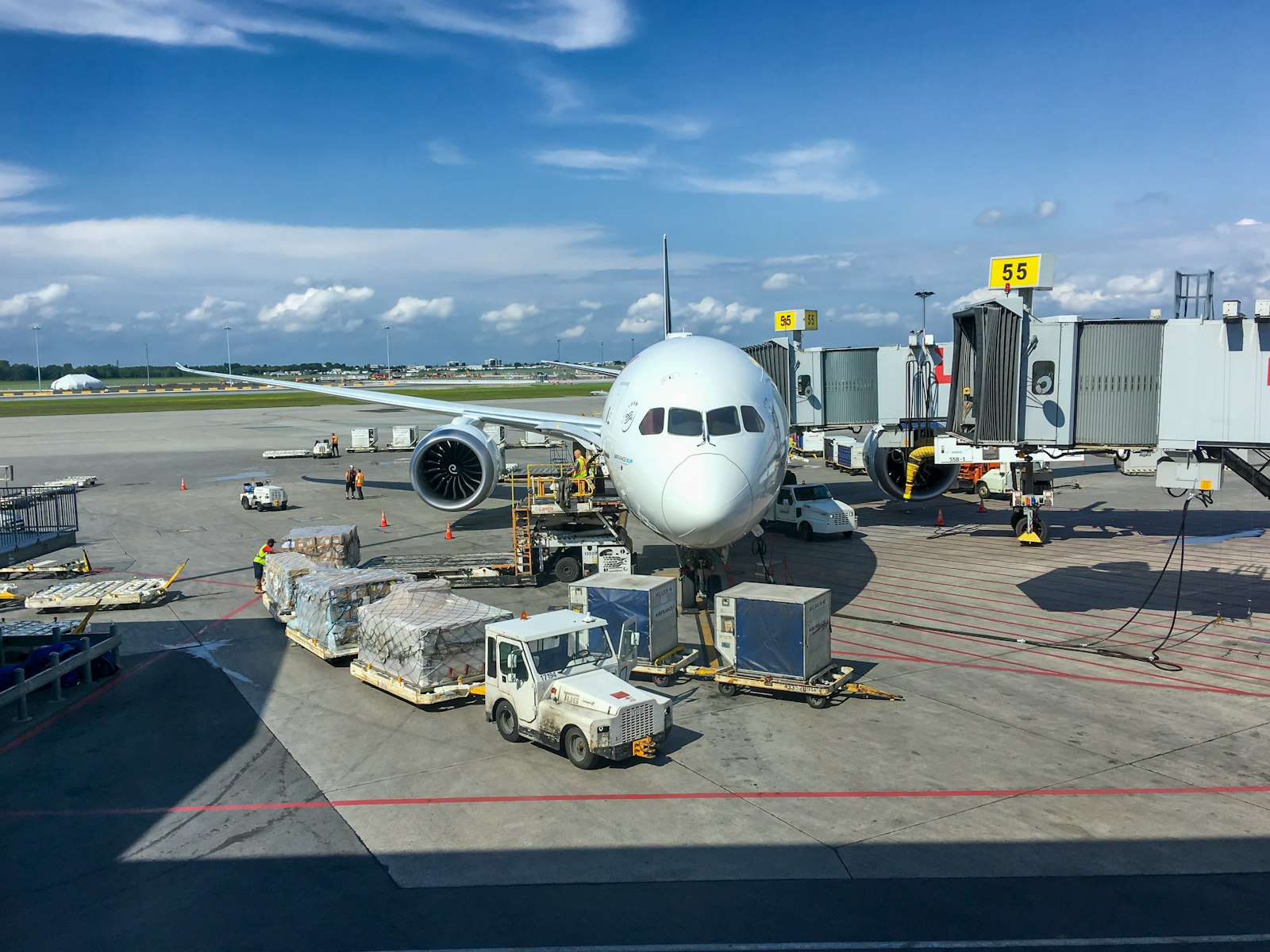

Floral logistics decides whether Valentine’s roses arrive on time and at what price, and the 2026 peak showed that the planes matter as much as the farms. Charter flights grew from 19% of cargo capacity at Bogotá and Quito in the first week of 2026 to 45% by week six, according to Aevean data reported by Cargo Newswire. That swing is worth understanding before you sit down to negotiate freight for 2027.
Why is floral logistics so seasonal?
Flower freight is built around a few weeks of extreme demand. FreightWaves reported in 2025 that nearly 70% of floral products move between Valentine’s Day and Mother’s Day, and that Miami handles more than 90% of U.S. air flower imports. The same report put Miami’s flower volume at about 360,000 tons a year, worth about $1.65 billion, with Colombia and Ecuador supplying roughly 86% of air flower imports.
That concentration is the core of the problem. A small number of origin airports, one dominant U.S. gateway and a short selling window leave little slack when demand jumps.
What happened to air cargo capacity at the 2026 peak?
Cargo Newswire, citing Aevean data, reported total weekly capacity at Bogotá and Quito of 30,000 tonnes in week six of 2026, up 16% from a year earlier. In week one, capacity was up only 1%. Charters filled the gap, rising from 19% to 45% of capacity over those five weeks.
Individual carriers added flights to match:
- Avianca Cargo moved more than 19,000 tonnes of flowers in a 22-day peak, up 6%, on close to 320 freighter flights, according to Aviation Business News. Its seasonal workforce grew by more than 30%.
- LATAM Cargo carried 24,300 tonnes, down from about 25,000 in 2025, on roughly 430 flights from Bogotá, Medellín and Quito, per Cargo Newswire.
The takeaway is that capacity is not fixed. It is assembled each January from scheduled freighters plus charters, and charter space is typically the most price-sensitive part.
Is Miami still the only gateway that matters?
Not entirely. Aviation Business News reported that Avianca’s Colombia-to-U.S. flower volume rose more than 40% into Los Angeles in 2026, against 4% into Miami. On its peak day, Miami received more than 1,300 tonnes, close to one freighter arrival per hour.
One carrier’s numbers do not describe the whole market, but they show why it is worth asking your importer which gateway your product will use. A West Coast routing can change both transit time and the trucking leg to your distribution center.
How does the cold chain hold up in the air?
Aviation Business News reported that Avianca kept its internal coolers at 4-8°C during the peak. The air leg is only one handoff, though. Product still has to move from the ramp to a cooler, through customs and inspection, and onto a truck. Our floral cold chain checklist covers the checks that matter after landing, and our guide to the Miami import pipeline shows where order dates fall.
Five questions to ask your importer before Valentine’s 2027
These are our suggestions, not figures from the sources above. They turn the capacity data into negotiating points:
- What share of my volume will move on scheduled freighters versus charters?
- Which U.S. gateway will my product use, and is there a backup?
- Who carries the cost if freight rates move after I place my pre-book?
- What are the cut-off dates for farm pick-up, and what happens to late product?
- At what temperature is product held at each handoff, and who documents it?
Valentine’s Day 2027 falls on a Sunday, which shifts delivery timing; see our Valentine’s 2027 plan for how to work backward from the date. For the broader cost picture, read our report on rising freight costs.
Floral logistics takeaways for buyers
- Capacity is built each winter from freighters plus charters; ask how much of your program depends on charters.
- Total weekly capacity at Bogotá and Quito reached 30,000 tonnes in week six of 2026, up 16% year over year (Cargo Newswire, citing Aevean).
- Miami remains dominant, but Los Angeles volumes grew faster on at least one major carrier.
- Lock freight terms in your pre-book, not after the peak begins.
Figures are as reported by the cited publications and have not been independently verified. Some are from the 2025 season, as noted.

Travis Rigby is the publisher of SuperFloral, the news source for the mass-market floral industry. He leads its website and weekly newsletter, covering what matters to growers, breeders, supermarket floral buyers and category managers. Travis studied journalism at the University of Utah, founded and led PosterGarden.com for 27 years, and is president of FlowerBox.com.