Houseplant shoppers are making fewer trips than they did during the pandemic, but they are spending more when they come in and plan to spend more next year. That is the key takeaway for plant and floral buyers from the Floral Marketing Fund’s Consumer Houseplant Purchasing Report 2025, released Oct. 15.
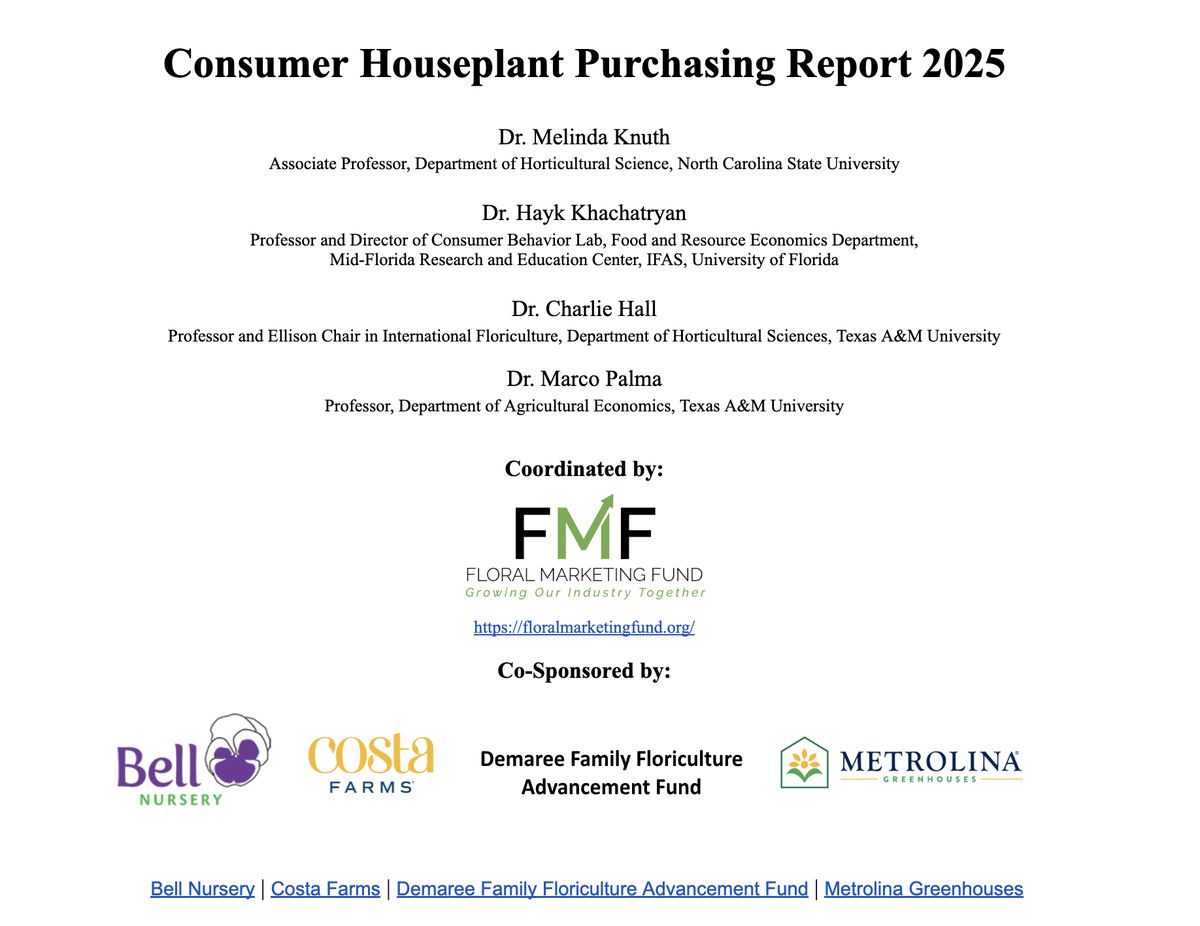
Who ran the houseplant study
The national survey is the third in an FMF series that tracks the same questions across 2019, 2021 and 2025, giving the trade a pre-pandemic, pandemic-era and post-pandemic view, according to the FMF’s announcement. The FMF was established in 2008 by the American Floral Endowment (AFE) to conduct consumer research that promotes floral consumption.
The study was co-sponsored by three major potted-plant growers, Bell Nursery, Costa Farms and Metrolina Greenhouses, along with the Demaree Family Floriculture Advancement Fund. Researchers were Melinda Knuth of North Carolina State University, Hayk Khachatryan of the University of Florida, and Charlie Hall and Marco Palma of Texas A&M University.
Key numbers for plant buyers
- Bigger spending per shopper. Purchasers in 2025 owned more plants and reported higher spending across comparable houseplant categories than in 2019 and 2021, despite buying less frequently.
- Growth planned for 2026. Consumers expect to increase spending in all 10 plant categories in the study.
- A large untapped group. Seventy-seven percent of non-purchasers said they would or might buy a houseplant. Their main barriers were pets, keeping plants alive and spending priorities.
- Social media drives sales. Seventy-three percent of purchasers had bought from a houseplant business after seeing its social media content.
- Wider gift use. Compared with 2019, more consumers in 2025 saw houseplants as fitting gifts for get-well wishes, thank-yous and personal enjoyment.
- Well-being sells. Of purchasers, 96.6 percent agreed to some extent that houseplants make them happier, and 80.6 percent agreed or strongly agreed.
The full report adds preferred varieties, demographics, shopping outlets, acceptable price ranges and online buying barriers. It is free to download from the FMF, with an optional contribution to fund future FMF research.
What this means for buyers and category managers
The following are our suggestions based on the findings.
- Plan for fewer, larger baskets. Fewer trips with higher spending argue for bundles, upgraded containers and multi-plant displays rather than more low-price SKUs.
- Merchandise plants as gifts. Place gift-ready plants with sleeves or cachepots next to cards and the floral case, signed for get-well and thank-you.
- Remove the barriers. Pet-safe and easy-care signage speaks directly to the two biggest reasons non-buyers give.
- Use the data in grower talks. With spending expected to rise in every category in 2026, review program volumes and price points with suppliers now.
The FMF will walk through the results in a free webinar on Nov. 5 at 1 p.m. Eastern (register here), followed by an article series on the main takeaways.
For more on mass-market performance, see Supermarket floral benchmarks show 48% margin, 9% shrink and uneven regional growth and Poinsettia holiday program: novelty colors, combo containers and fewer growers.

The SuperFloral Team brings you news, trends and practical ideas for supermarket and mass-market floral professionals. Our editors gather and curate the stories that matter most to floral teams in grocery and retail, from industry news and events to merchandising inspiration and business advice. Have a story idea or news tip? Write to us at editorial@superfloral.com.