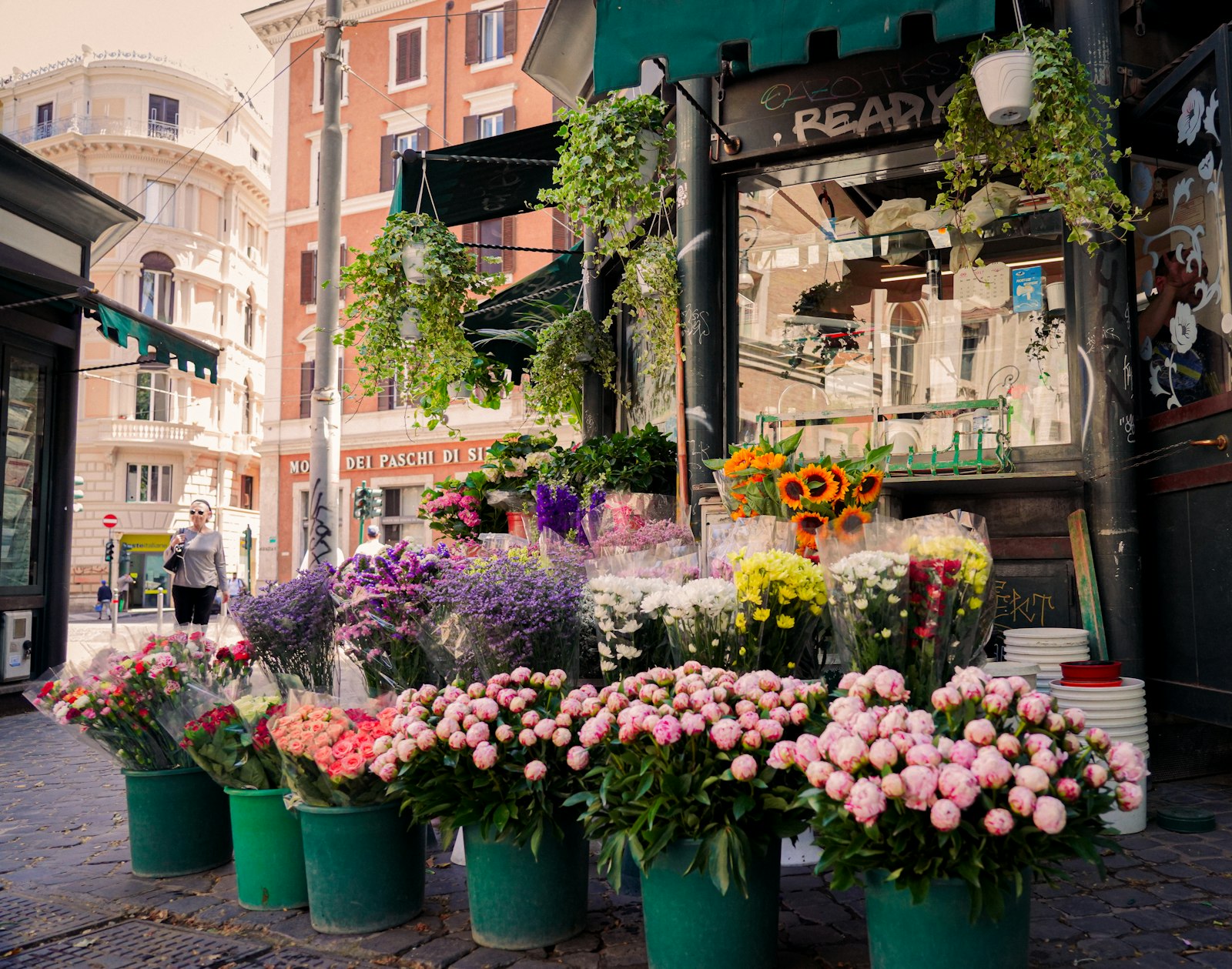

Grocery floral shrink averages 9% of sales, according to the International Fresh Produce Association’s 2025 supermarket benchmarks. In the average department, that is roughly $8,900 a year in product that is thrown out or marked down to nothing. This guide shows what each point of shrink costs, the five places flowers are lost and a weekly scorecard to cut the number.
What does each point of shrink cost?
IFPA reports average floral sales of $98,892 per store, a 48% gross margin, 10% labor and 9% shrink, which leaves a contribution of about 29% of sales. The table applies shrink rates to that average department. The dollar figures are our arithmetic from IFPA’s sales number.
| Shrink rate | Annual shrink cost | Saved versus 9% |
|---|---|---|
| 9% (national average) | $8,900 | None |
| 8% | $7,911 | $989 |
| 7% | $6,922 | $1,978 |
| 6% | $5,934 | $2,967 |
| 5% | $4,945 | $3,956 |
Shrink is measured here as a share of sales, as IFPA reports it. Check how your own finance team defines it before comparing.
Where does grocery floral shrink actually happen?
Shrink is not one problem. The following framework is our own, built from extension guidance and IFPA data, and each stage needs its own measurement.
- Ordering and forecasting. Flowers ordered above demand are shrink before they arrive. Compare orders with scan data by item and by day, especially around holidays.
- Receiving. Check temperature, stem condition and box counts on arrival, and record claims before product is shelved.
- Cooler and hydration. The University of Kentucky’s cut flower guide, reviewed in 2023, puts most species between 34 and 42 degrees Fahrenheit and says to hydrate stems in solution before display. It also says to keep flowers away from fruit and vegetables, which release ethylene that speeds decay. Our care and handling guide covers the full routine.
- Time on the sales floor. Species differ. A UC Davis fact sheet last updated in 2004 describes carnations as ethylene sensitive and recommends storage at 0 to 1 degrees Celsius, one example of why mixed displays need species-specific rules.
- Markdown and transfer. Moving aging product early recovers more value than throwing it out. An older Texas A&M extension tip sheet, undated but evidently from the early 1990s, suggests marking declining stock down before quality drops. The principle holds, though the specifics are dated.
What is a realistic shrink target?
The following is our arithmetic. Moving from 9% to 6% shrink lifts IFPA’s contribution estimate from 29% to 32% of sales, since contribution is gross margin minus labor minus shrink. For a 100-store chain at the average $98,892 per store, sales are about $9.89 million, so each point of shrink is worth about $98,900 a year and three points are worth about $297,000. Set the target by category, because bouquets and plants lose product for different reasons, and review it quarterly.
Do not cut shrink by cutting selection
Chasing a low shrink number can backfire. IFPA’s 2024 consumer tracker, based on 754 U.S. adults, found that 25% of shoppers cite in-store floral displays as their primary cue to buy, and about one in three say the floral department influences which grocery store they choose. A thin, tired display costs sales that never appear on a shrink report. Track shrink beside sales per square foot, which IFPA puts at $163 for the average department.
A weekly shrink scorecard
| Metric | How to calculate | Why it matters |
|---|---|---|
| Shrink % of sales | Shrink dollars at retail divided by sales | Compare with IFPA’s 9% |
| Shrink by category | Bouquets, roses, plants, arrangements separately | Finds the leak |
| Receiving claims | Dollars credited by suppliers | Recovers cost |
| Days on floor | Average age at sale | Signals over-ordering |
| Markdown recovery | Sales of marked-down product divided by its retail value | Shows whether markdowns happen early enough |
Pair the scorecard with the benchmarks in our IFPA benchmarks summary, and apply it before the holiday peak described in our Thanksgiving program checklist.
Takeaways: a plan to cut grocery floral shrink
- Use the 9% national average and the $989-per-point figure as your baseline when you set a grocery floral shrink target.
- Measure shrink at five stages, not as one line, so you know whether the leak is ordering, handling or markdown.
- Keep product 34 to 42 degrees Fahrenheit, hydrated and away from ethylene sources, per the Kentucky guide.
- Do not cut assortment just to lower shrink. Displays drive purchase.
Sources: IFPA supermarket floral benchmarks; University of Kentucky CCD-FS-21; UC Davis Postharvest Center (carnation, 2004); Texas A&M Aggie Horticulture; IFPA 2024 floral consumer trends tracker. Photo: Marcos Llerena / Unsplash.

Travis Rigby is the publisher of SuperFloral, the news source for the mass-market floral industry. He leads its website and weekly newsletter, covering what matters to growers, breeders, supermarket floral buyers and category managers. Travis studied journalism at the University of Utah, founded and led PosterGarden.com for 27 years, and is president of FlowerBox.com.