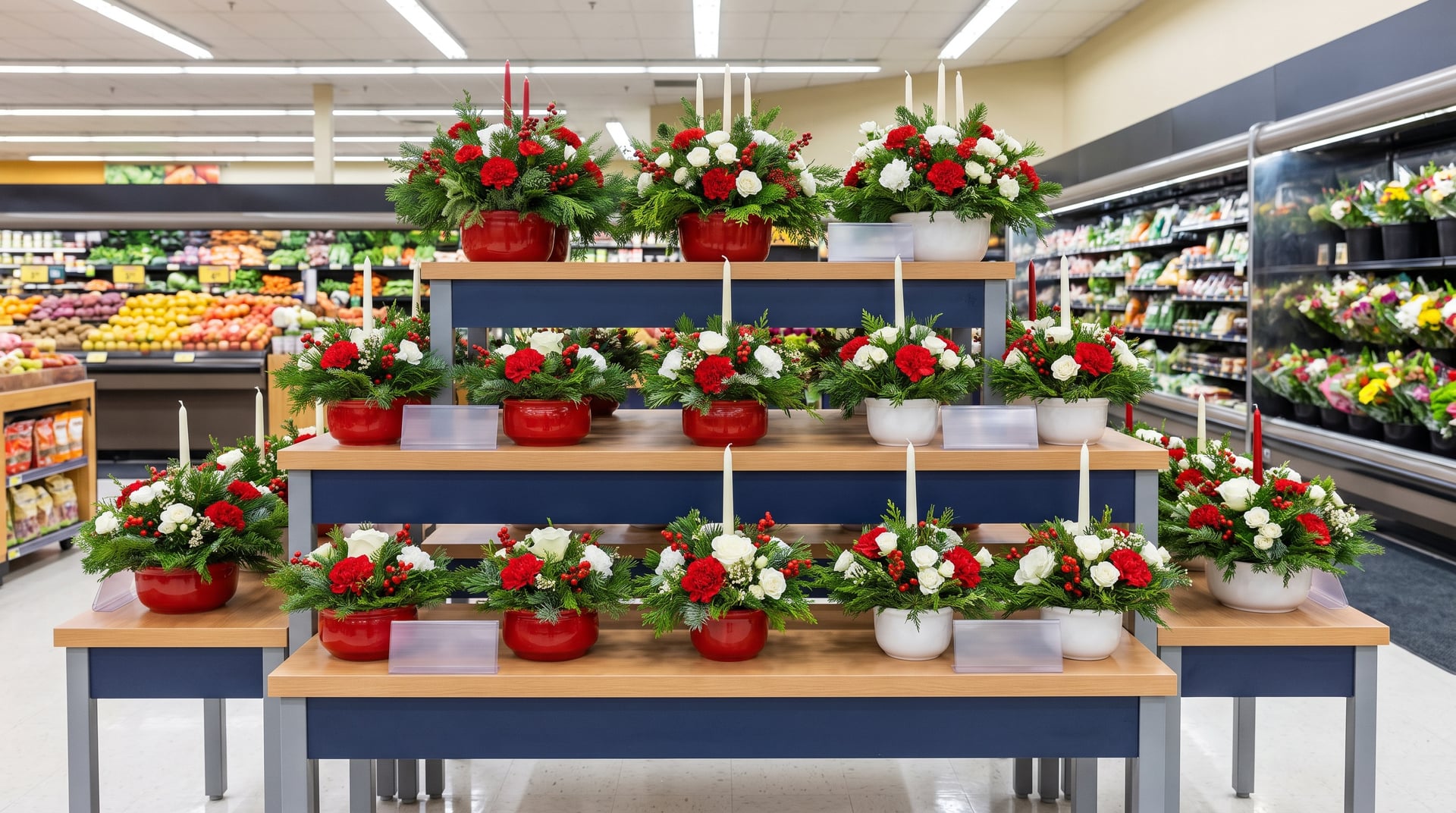

Every holiday meal starts with a shopping trip, and for millions of households that trip ends at the grocery store. That puts supermarket and mass-market floral departments in front of the holiday host at exactly the right moment — basket in hand, menu in mind and a table still waiting for a centerpiece.
Turning that traffic into centerpiece sales takes more than adding a few arrangements to the cooler. Retailers that win the holiday table treat centerpieces as a planned program, built with growers and bouquet makers months in advance and managed week by week through the season.
Know the 2026 calendar
In the U.S., Thanksgiving falls on Thursday, Nov. 26, and Hanukkah begins at sundown Friday, Dec. 4. Christmas Day is Friday, Dec. 25, and New Year’s Eve is Thursday, Dec. 31. In Canada, Thanksgiving arrives much earlier, on Monday, Oct. 12, giving cross-border retailers an early test of their holiday table assortment.
Demand for table flowers concentrates in the few days before each meal, when shoppers pick up groceries. Plans for receiving, processing and merchandising should mirror that curve, with the heaviest deliveries landing just ahead of the peak shopping days.
Build a tight, tiered assortment
A centerpiece program works best with a short list of SKUs at clear price points. A common structure is good-better-best: a compact grab-and-go piece for small households and hostess gifts, a standard centerpiece for the main table and a premium design with candles or upgraded containers for shoppers who want to make a statement.
Keeping the assortment focused simplifies procurement, labeling and replenishment. It also makes the display easier for shoppers to read in a busy store.
Design specifications should reflect the end use. Table designs need to stay low so guests can see one another, look finished from every side and hold up for several days in warm, dry homes. Long-lasting flowers and foliage, such as carnations, spray roses, alstroemeria, chrysanthemums, hypericum, eucalyptus and evergreens, help protect the shopper’s experience and the retailer’s reputation.
Lock in supply early
Holiday centerpieces compete for the same flowers, containers and labor as every other seasonal program. Retailers that finalize specifications, volumes and delivery schedules with growers, importers and bouquet makers well before the season are better positioned to secure product and hold cost.
Pre-booked programs also give suppliers time to source containers and hard goods, many of which have long lead times. Building in a small allocation for replenishment helps a retailer respond if a design outsells forecasts.
Merchandise where the meal is planned
Centerpieces sell when they are seen alongside the meal. Secondary displays near produce, bakery, holiday meal kits and the front of the store put flowers in the path of shoppers who may never visit the floral department.
Cross-merchandising strengthens the basket. Candles, napkins, serving pieces and seasonal decor displayed with centerpieces suggest a complete table. Simple signage that frames the centerpiece as part of the meal — rather than as an extra — helps shoppers justify the purchase.
Don’t forget digital and pickup
Online grocery and click-and-collect orders spike before holiday meals. Centerpieces need accurate, appealing product photography, clear dimensions and descriptions written for the table. Designs packed for pickup and delivery must travel well, so sturdy containers and protective sleeves matter.
Adding centerpieces to holiday meal pre-order programs can also lift sales. A shopper ordering a turkey dinner for pickup is a natural candidate for a matching centerpiece.
Manage freshness and shrink
Centerpieces carry more labor and hard goods than a mixed bouquet, so shrink can quickly erase margin. Maintaining the cold chain from supplier to store, rotating stock carefully and training associates on basic care all extend shelf life.
A clear sell-through plan is just as important. Retailers should decide in advance how inventory will be handled after each holiday, including when to adjust price and how to transition displays to the next occasion. Because the holidays run back to back, a well-timed transition from Thanksgiving to winter and Christmas designs can keep the program moving.
Give shoppers a reason to come back
Care cards with simple instructions — keep the design cool, away from heating vents and topped up with water — help centerpieces last through multiple gatherings. A shopper whose Thanksgiving centerpiece still looks good the following week is more likely to buy again for Christmas.
Supermarket floral already has the traffic. With planned supply, a focused assortment and merchandising that connects flowers to the meal, mass-market retailers can make the holiday centerpiece one of the most productive programs of the year.

Travis Rigby is the publisher of SuperFloral, the news source for the mass-market floral industry. He leads its website and weekly newsletter, covering what matters to growers, breeders, supermarket floral buyers and category managers. Travis studied journalism at the University of Utah, founded and led PosterGarden.com for 27 years, and is president of FlowerBox.com.