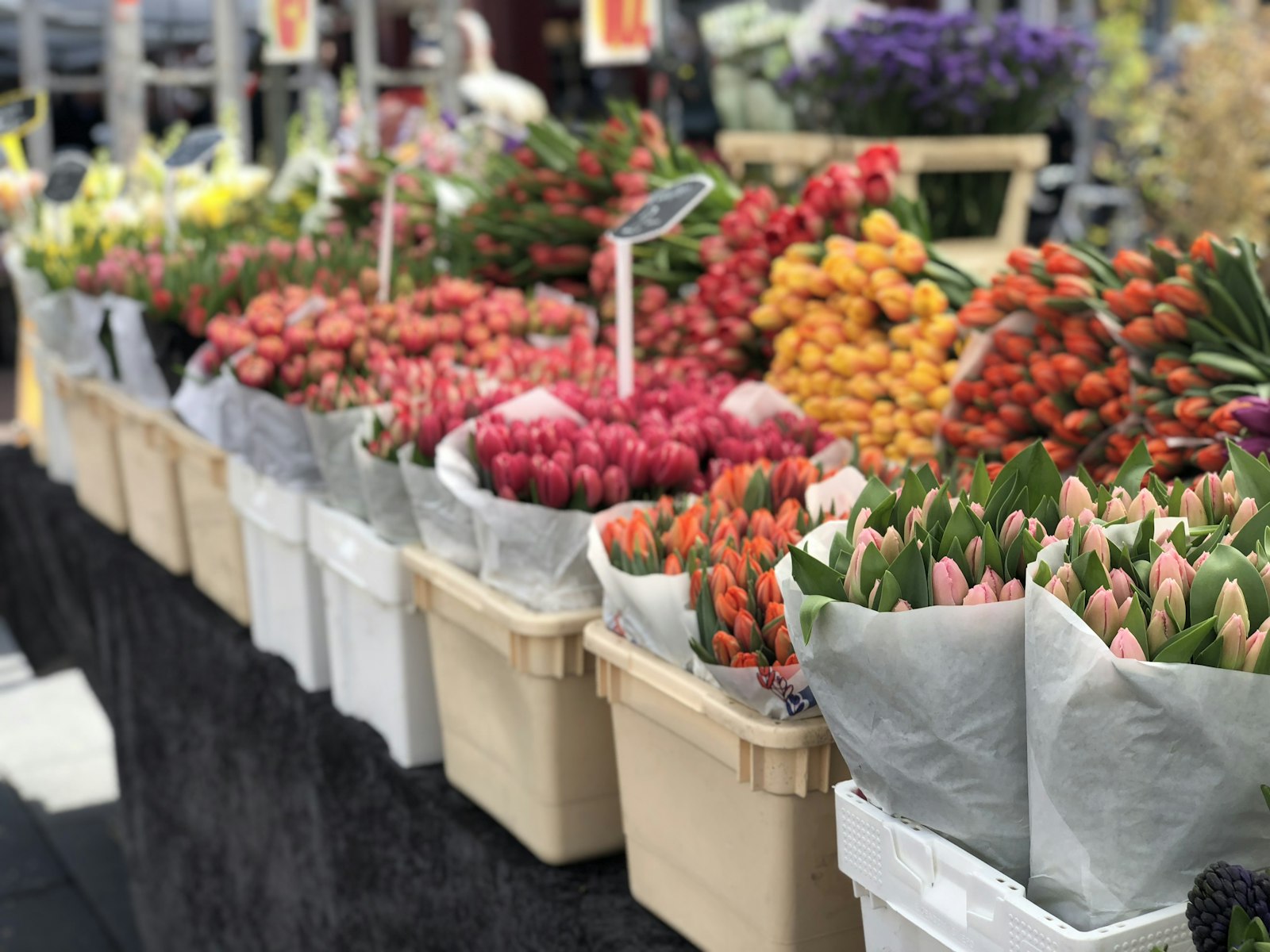

Supermarket floral pricing has to cover three things at once: a price the shopper accepts, a gross margin near the industry’s 48% and the 9% of product that never sells. This guide shows what U.S. shoppers actually paid per unit across IFPA’s recent reports, then works through the margin math with examples you can rebuild in a spreadsheet.
What do shoppers pay per unit?
| Category | Feb. 2026 | May 2026 | July 2026 |
|---|---|---|---|
| Whole floral department | $14.04 | $11.91 | $9.90 |
| Roses | $17.69 | $16.00 | $14.59 |
| Bouquets | $15.81 | $16.81 | $14.02 |
| Arrangements | $35.53 | $33.71 | $29.54 |
| Potted plants | $12.28 | $13.63 | $11.09 |
| Consumer bunch | $7.44 | $7.83 | $6.98 |
| Outdoor plants | $8.60 | $9.43 | $7.08 |
Average price per unit, four weeks ending Feb. 22, May 17 and July 12, 2026. Source: IFPA U.S. Floral Retail Point of Sales, Circana data. IFPA’s tables occasionally carry label inconsistencies.
Holiday mix moves the averages. The department average falls from $14.04 in the Valentine’s window to $9.90 in July. Prices were also higher than a year earlier: in July bouquets were up 8.6%, roses up 5.8% and arrangements down 1.2%.
How does price affect units?
The reports do not isolate cause and effect, but they show the tradeoff. Roses in the February period rose 4.5% in price and units fell 1.8%. Bouquets in the May period rose 6.5% in price and units still grew 1.2%. In June, bouquet price rose 6.6% and units fell 3.4%. Price and units moved differently in each period, so test increases by category instead of applying one across-the-board change.
Check the mix before you read the price
Average price per unit swings with what shoppers buy, not only with what you charge. IFPA’s department average was $12.28 in the four weeks ending Nov. 30, $12.32 in December, $14.04 in the Valentine’s window, $11.91 around Mother’s Day, $9.19 in the June period and $9.90 in July. Roses and arrangements pull the average up in holiday windows, and bunches and outdoor plants pull it down in summer. Compare price with the same period a year earlier, not with last month.
Price up, units down: the February 2026 picture
| Category | Price per unit change | Unit change |
|---|---|---|
| Roses | +4.5% | -1.8% |
| Bouquets | +4.7% | -2.4% |
| Arrangements | +0.3% | +1.5% |
| Potted plants | +4.4% | -9.5% |
| Consumer bunches | +6.2% | -4.6% |
IFPA attributed the weak February unit results to low consumer confidence, inflation and the Saturday holiday timing. Arrangements were the one major category that grew units with a nearly flat price.
The margin math: 48% gross, 9% shrink
IFPA’s 2025 supermarket benchmarks report a 48% gross margin, 10% labor and 9% shrink, leaving a contribution of about 29% of sales (48 minus 10 minus 9). Shoppers spent an average of $10.65 per item. These examples are our arithmetic, using a $14.00 bouquet for illustration.
- Cost at a 48% margin: $14.00 x 0.52 = $7.28 per bouquet.
- Shrink effect: receive 100 bouquets at $7.28, sell 91 at $14.00. Sales are $1,274, cost is $728 and margin is $546, or 42.9% of sales, not 48%.
- Price needed to protect 48% through 9% shrink: about $15.38, roughly 9.9% above $14.00.
- Tariff pass-through: a $0.50 cost increase needs about $0.96 more at retail to hold a 48% margin ($0.50 divided by 0.52).
The takeaway is that every point of shrink you cut is worth more than a price increase of the same size. See our guide to flower care and handling at scale for the handling side of shrink.
Build a price ladder instead of a single price
The following is our planning approach, not an IFPA rule. Anchor each tier near the observed averages: a consumer bunch near $7, a standard bouquet in the mid-teens, a premium or holiday bouquet higher and an arrangement near $30. IFPA’s holiday bouquets averaged $20.03 in the four weeks ending Dec. 28, 2025 and $23.72 in the period ending Nov. 30, against $14.20 and $13.97 for standard bouquets, a premium of about 41% and 70%, by our calculation. Holiday packaging can carry a clearly higher price.
A simple pricing worksheet needs six columns: landed cost, freight and duty allocation, expected shrink percentage, labor allowance, target gross margin and the resulting retail price. Build one row per SKU and re-run it whenever freight or duty changes.
Takeaways: supermarket floral pricing checklist
- Start supermarket floral pricing from landed cost, then add shrink to the cost basis before applying margin.
- Re-check price ladders when cost inputs change. Freight and duties, covered in our tariff coverage, flow straight into margin.
- Track units next to dollars by category every period.
- Benchmark yourself against the national 48% margin and 9% shrink, using our benchmarks summary.
Sources: IFPA supermarket floral benchmarks; IFPA U.S. Floral Retail Point of Sales reports (Circana). Photo: Daniel Spilka / Unsplash.

Travis Rigby is the publisher of SuperFloral, the news source for the mass-market floral industry. He leads its website and weekly newsletter, covering what matters to growers, breeders, supermarket floral buyers and category managers. Travis studied journalism at the University of Utah, founded and led PosterGarden.com for 27 years, and is president of FlowerBox.com.